


Why Tradition Matters at Trinity
- Aidan Slind
- Sep 17, 2014
- 3 min read
Dear first-years,
Perhaps someone in your family matriculated here. Perhaps you know a current student from your high school days, or maybe you read the rag they call the Toronto Star. One way or another, you may know that Trinity College is a little different, and you are likely in the process of finding out how. In this letter, I will defend Trinity’s unique way of life – one that is deeply egalitarian and democratic – and explain why it is important for you to take part in it to the fullest extent.
First, I would like to counter what you might have heard about the inherent elitism in our culture. It is true that many of our customs derive, if loosely, from those great public schools and universities of Great Britain, and carry all the aristocratic ease and arrogance thereof. But unlike an Oxbridge College, our admissions process is meritocratic. The fact that all men and women - regardless of status - are able to take part in these rituals are what make our college deeply egalitarian.
An alumna of Trinity from the early ’60s told me that she always appreciated academic gowns precisely because they allowed students who may be from an underprivileged background to dress the same as everyone else at important functions. To do away with gowns, as example of a tradition that brings cohesion and uniformity, would make room for real elitism, and a vain, vulgar elitism at that.
For those who might question the legitimacy of these traditions on democratic grounds, the fact of the matter is that every last one of these customs have been voted on, just as our predecessors have voted on them. Tradition, as G.K. Chesterton put it, is “the democracy of the dead.” For generations Men and Women of College have ratified these rites and rituals, whose cumulative wisdom we could not hope to match.
G.K. Chesterston makes the valuable point that today’s Men and Women of College are but a “small and arrogant oligarchy of those who merely happen to be walking about.” We are part of a larger tradition that extends far beyond our current time and place. And while it lies in our power to change certain customs - in lockstep, of course, with the political agendas particular to 18-22 year olds in our day - I maintain that such moves would be both foolish and arrogant.
It would be immensely prideful to assume that we know so much more than our predecessors that we should declare the past wrong, the present right, and bind the future to our judgment.
However unique our way of life may be, the fact of the matter is that it brings Trinitrons together, creates unique memories, and enriches our student experience. Canon John Whittal, a Divinity graduate of 6T9 and a previous Head of College, remembers how critical a shared culture was in integrating non-residence students, engaging them through the practice of common customs and participation in common events - most importantly those of Orientation. Through this, his belief was reinforced that “a student of Trinity is a student of Trinity, no matter where he [or she] is”.
Alumna and children’s author, Ann Love, said she would “always smile remembering those awkward words” of The Salterrae; chanted with her fellow Saint Hildians before a field hockey game, when they would beat their hockey sticks against the grass. Though a strange choice for an athletic cheer, it has become one of her most treasured memories.
Another alumnus, Jim Sidorchuk of 8T4, put it best:
I’m still a strong supporter of Trinity’s traditions…Looking back over 30 years now, one of the most valuable things about the experience was the community that it managed to build. And our traditions were an important part of the glue that tied this community together.
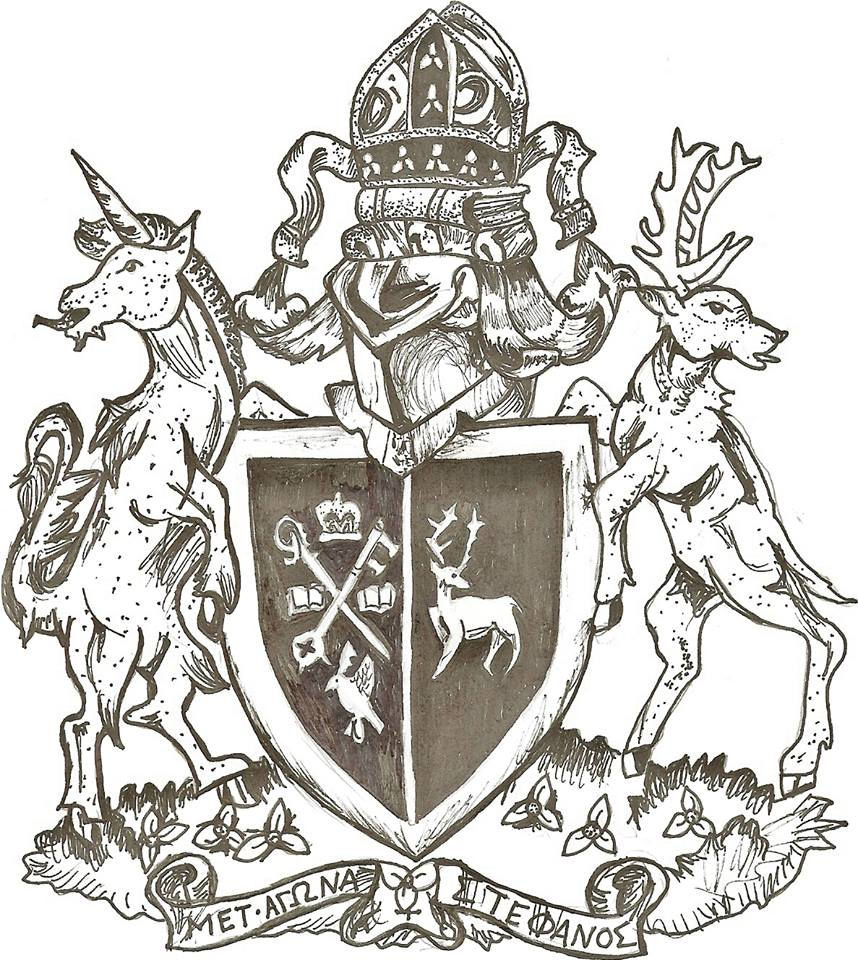
Imagine yourself fifty years from now. As you look through the images in Trinity magazine of the year’s incoming students, you will find that the clothes they wear are different, that their friends are less old and lame than you own, and the songs you hear on the radio are scarcely recognizable to you as music. But in High Tables, deports, rushes, and the drunken strains of Met’agona Stephanos, you will find that you have some things very much in common with the class of 6T8, just as the 6T8s of a century before had a lot in common with you.
That is a beautiful thing.
So keep the faith; preserve those precious customs that connect us to students past and students yet to come, and take an active role in College life. You could have gone to dorm parties at Queen’s, played League of Legends at McGill, or loitered in your room at Western. However, this College makes a different offer, and I suggest you take it.
Yours sincerely,
A second-year.


Comments