


An Alumna Looks Back
- Virginia Froman, 8T1
- Apr 10, 2015
- 3 min read
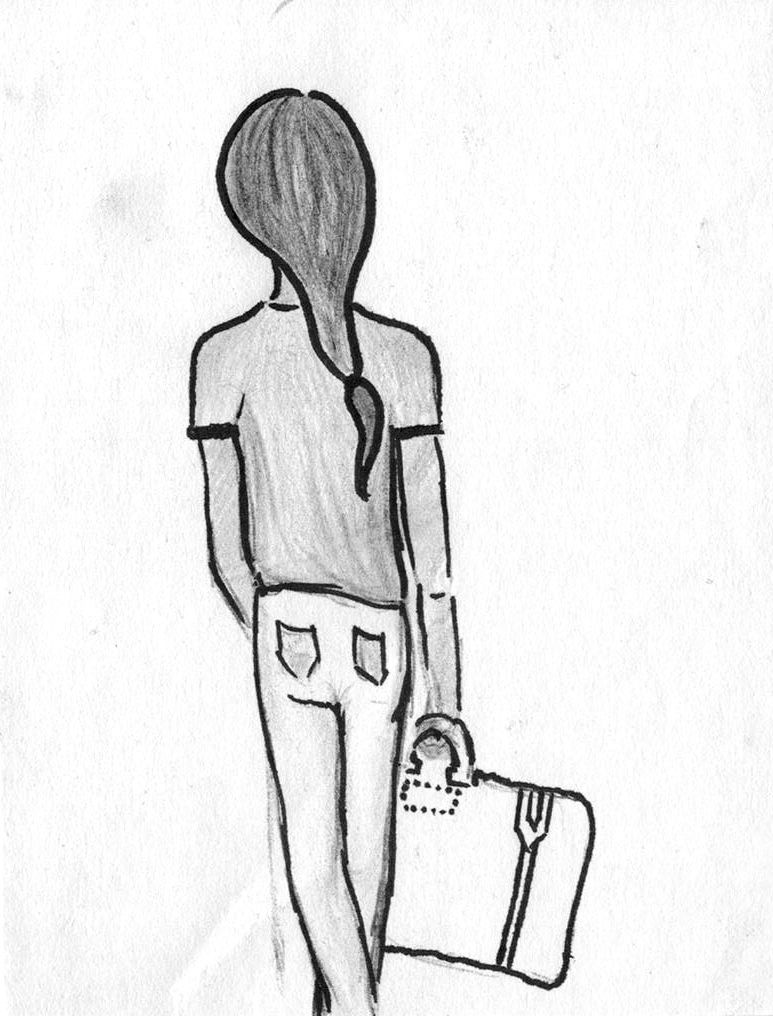
Labour Day weekend in 1977, I landed in Toronto for the first time, with one red suitcase and nowhere to live. Back then, first year students were not guaranteed a place in residence. But then, the room of a late-returning second year student was available for me until the end of Frosh Week. Climbing the stairs at St Hilda’s, suitcase in tow, I turned at the landing halfway and was hailed from the top, ‘Hi, I’m a Divine” said a commanding figure. Friendly, I thought, but what is that? A Divinity student, it turns out.
Still, most of orientation had to be spent away from Trinity, pounding the pavement until I finally found a room to rent in a house on Beverley Street. In November there came word of a room at St Hilda’s! A fellow student had dropped out. What appeared to be her loss seemed my gain as I was immersed in the College community.
Trinity was overwhelming at first: I felt anything but sure of myself. There seemed to be a ton of stuff going on, including strange things, no clue what purpose they were meant to serve. Before the Freshman Debate, a classmate and I were coached by the Prime Minister of the Lit in the (dubious) art of innuendo. The resolution, we were debating was, ‘Be it resolved that any woman can…’ How did I not know about any of this? I felt I should have asked more questions, done more research… surely others felt the same?
Since 1851, members of this College have, in one location or other, debated, studied, played music and sport, formed societies and committees, danced, chanted, mourned and frequently feared that the sky was falling. I know my peers were also uncertain, inquisitive, rebellious and, consequently, over the decades, Trinity has changed.
And change is relative. It’s both internal and external and we are able to feel both as we have impact and are impacted by a community. Students used to churn out the next issue of the Salterrae late on Sunday nights on an old mimeograph machine in a closet-like space in the basement of St Hilda’s. This seems antiquated given that I’m creating this document using technology that did not exist during my time as an undergraduate.
Was I inspired or alienated by the perspectives of my peers? One year on Second Kirkwood, the door next to mine bore a little taped-on note which read, “l’enfer, c’est les autres...” And did people really believe that allowing women to live in residence at Trinity (Proper) would irrefutably and forever alter the ethos of the College? This was a fiercely contested issue circa 1980.
And did the fellow student who broke OAK to ask to borrow my typewriter truly believe she had a higher need? I was actually and audibly using it at the time, working on my own overdue essay, hence the OAK sign on my door on 2nd Massey. (When academic focus was imperative, we would write ‘OAK’ on an index card and tape it to our door to signal Please Do NOT Disturb. This tradition was said to have originated in England, perhaps Oxford, where students would close the outer Oak door to their room when they needed to study. Not having an outer door, we posted an OAK sign. This was used judiciously for study purposes and respected.) I remember being both irritated and shocked at this interruption. No, I replied, a small word, very useful.
It was strange how the capacity to feel belonging could sometimes shift to the opposite. While many aspects of college life drew me in, others repelled. Yet, day after day, class after class, debate after debate, haring space and food and friendship, we all navigated as well as we were able. And in any context, it is by navigating with others through the issues of the day that we each find a sense of perspective, learn to calibrate what to pay attention to, what we can find in common, where to draw the line. Some students may flee, as did the previous occupant of my room. This can be a good option too, one which I now understand. Yet somehow, most of us graduate and move on. But the buildings don’t hold us together. And what does connect us includes more than youth and shared experience. We each belong, not because we believe in or agree on a specific thing, but because belonging is reciprocal, give and take.
One way or another we each put into the Trinity community some measure of what matters to us, perhaps a little, perhaps a lot. And I know that through the mistakes made and forgiveness found as part of this community, through all of the frustrations and the triumphs, the friendships stay with us, perhaps silently. Virginia Froman, 8T1


Comments